
Our meeting was as usual a virtual one. We meet on the second Tuesday of the month at 7.30pm. Newcomers are always welcome – you’ll find joining instructions on our website, amnestytaunton.com.
Our November meeting heard reports on the Death Penalty; it seems probable that, with an incoming Democratic President in the US, Federal executions will cease. Some members were planning to take part in a Twitterstorm, bombarding the Egyptian authorities with tweets on the birthday of Ibrahim Ezz El-Din who turned 28 on Sunday 15 November 2020. By then he will have been in prison in Egypt for 17 months simply for standing up for housing rights.
Amnesty’s work in India has had to cease because AI India’s bank accounts have been suspended by the authorities. Julie Verhaar, Acting General Secretary of AI said:
“This is an egregious and shameful act by the Indian Government, which forces us to cease the crucial human rights work of Amnesty International India for now. However, this does not mark the end of our firm commitment to, and engagement in, the struggle for human rights in India. We will be working resolutely to determine how Amnesty International can continue to play our part within the human rights movement in India for years to come.”
This is the time of year that Amnesty holds its Write for Rights events, but things will be a little different this year. However, we are still sending a card, email or tweet of support to ten individuals or groups of people whose freedoms are being denied, and writing to those in power to challenge their actions.

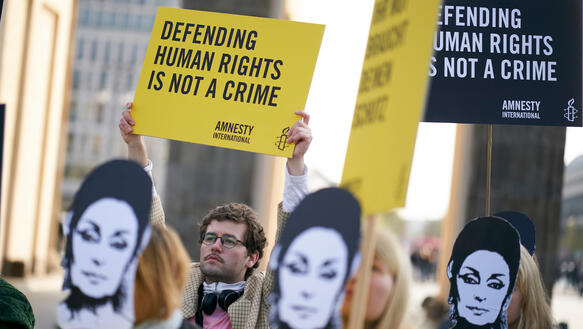
We will be holding a Vigil in Taunton town centre on 12 December from 10-11am, focussing particularly on the case of Nasrin Sotoudeh, a human rights lawyer sentenced to a horrific 38 years imprisonment and 148 lashes. Write for Rights materials and advice will be available at the vigil. Please join us – we will be standing near the Tourist Information Office at the bottom of the High Street. Please wear a mask and we will maintain 2m social distancing. If you want to find out about Nasrin in advance – here is a link. https://www.amnesty.org.uk/actions/free-nasrin-sotoudeh
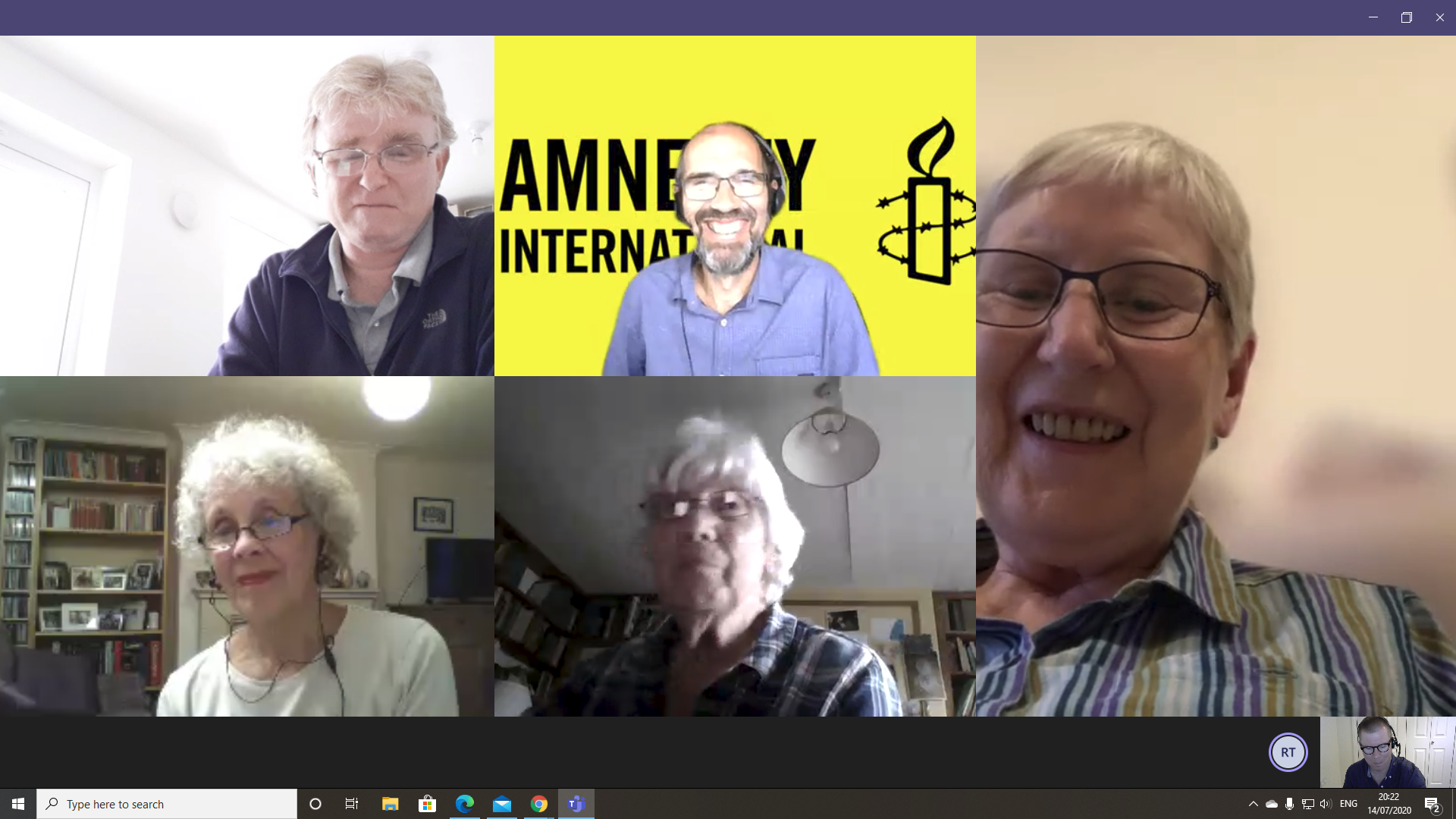 Our July meeting was held virtually – the new normal! We were joined by Helen Clarke of AIUK, Country Coordinator for Turkey, to describe her work, which is to keep abreast of all that is going on in Turkey from a Human Rights point of view and translate this into information and action.
 This month’s action was for Pakistani human rights defender and researcher Muhammad Idris Khattak (pictured) who was ‘disappeared’ in November 2019. Nothing has been heard of him since, and his family is extremely concerned for his well-being – he is a diabetic needing daily medication, and at risk of course from Covid-19. The disappeared are at risk of torture and even death. If they are released, the physical and psychological scars endure. Disappearances are a tool of terror that strikes not just individuals or families, but entire societies. Enforced disappearance is a crime under international law and, if committed as part of a widespread or systematic attack, they constitute a crime against humanity. We emailed Pakistan’s Prime Minister Imran Khan on his behalf; his government promised to criminalise enforced disappearances, but nothing has been done.

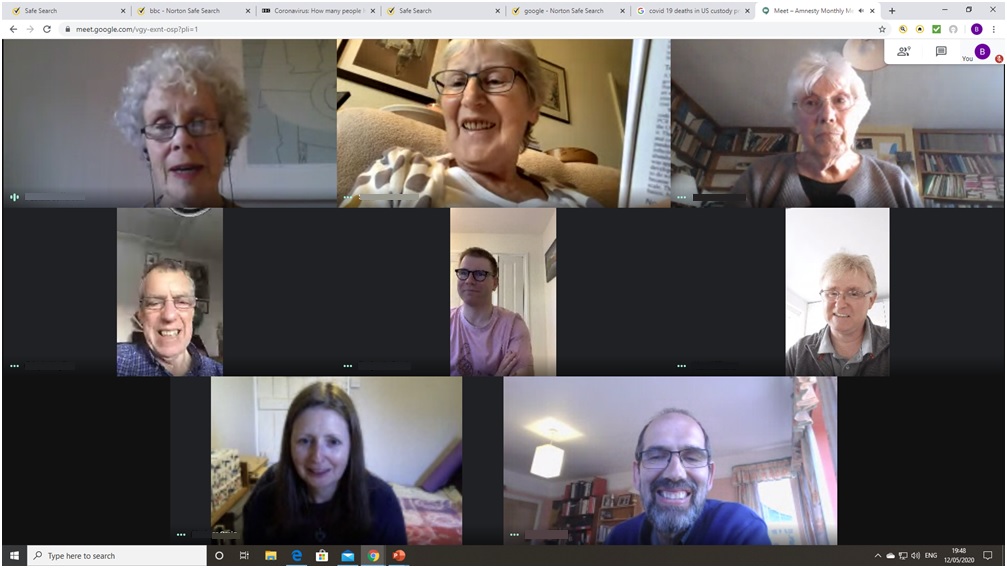 In tune with the times we held our second online virtual meeting this month, and followed up several Monthly Actions, influenced by the current crisis.
 Despite the current lockdown measures we were able to hold a virtual meeting from our own homes, and, thanks to the system set up, managed to communicate successfully.
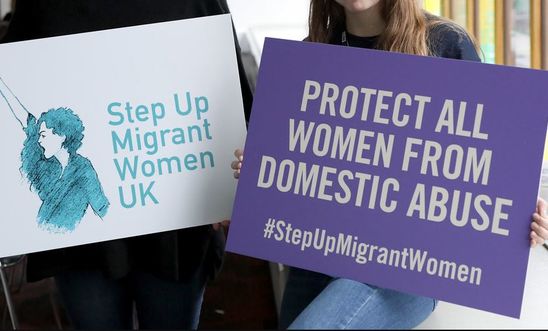 ular risk from Covid-19: women who are victims of domestic abuse, refugees and migrants, and, crucially, essential workers who need proper support and protective equipment.
 Self isolation. Funny, isn’t it, how the expression has quickly become part of our everyday language?
 Yesterday, Taunton Amnesty Group donated several children’s books about refugees to the Taunton Library (pictured). This donation accompanies a small display at the library to highlight the Families Together campaign.
 mean many are prevented from being joined by their parents, brothers and sisters. These restrictive rules leave people isolated, traumatised and alone in the UK, knowing that the people they love still face untold dangers in other countries.


