

Amnesty International is 60 this year! Founded in London in 1961 by lawyer Peter Benenson it has grown to an international, and internationally respected, organisation. He wrote then: ‘Only when the last prisoner of conscience has been freed, when the last torture chamber has been closed, when the United Nations Universal Declaration of Human Rights is a reality for the world’s people, will our work be done.’
Members have been asked for early memories of Amnesty. Do you have any? Do let us know.
We held our AGM this month, conducted remotely. New appointments of officers were made, and the pros and cons of working remotely discussed. It was suggested it would be good to link up with another Amnesty group to work on people in the Individuals at Risk category. We plan future speakers on such topics as modern slavery and South East Asia.
We heard reports from members. Amnesty’s work in India is still suspended, its Bank account frozen by the Indian Government. Nonetheless there are still contacts over human rights issues, for example the protests over recently introduced farm laws and the BK 16 group. AIUK has received a letter of thanks from recently-freed Ali Aarrass of Morocco.
We had an update on the inoffensively named Overseas Operations Bill – the government is attempting to pass a Bill that would decriminalise torture and war crimes by the military.
In a grotesque end to his Presidency, Donald Trump presided over ten Federal executions in 2020, going completely against the tide of public opinion and State law. We hope for changes under President Biden.
Book of the month: The Places in Between by Rory Stewart, a classic account of his 2002 solo walk from Herat to Kabul.
We meet (online) at 7.30 on the second Tuesday of the month – visitors are always welcome. Email amnestytaunton@gmail.com for details.


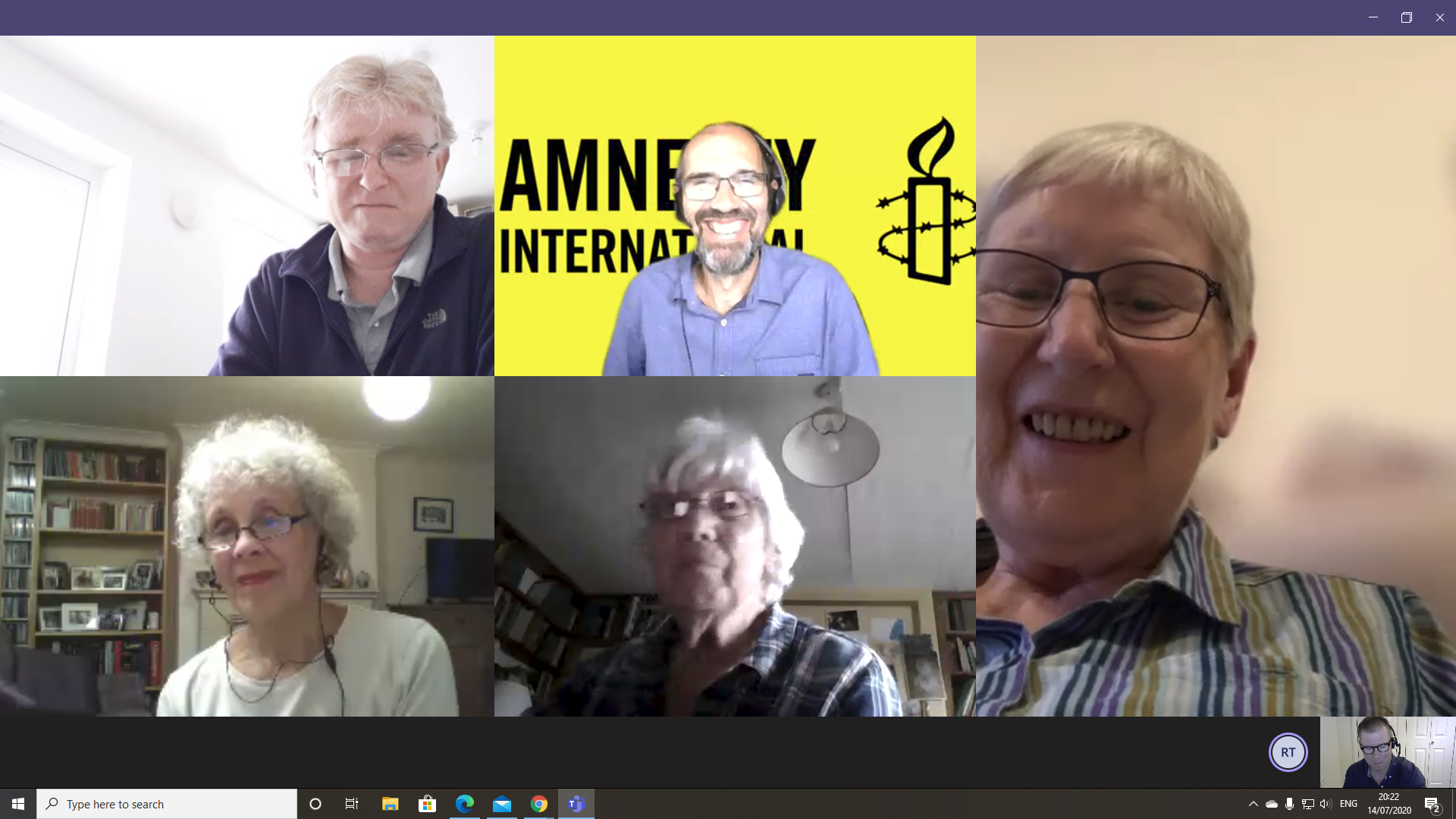 Our July meeting was held virtually – the new normal! We were joined by Helen Clarke of AIUK, Country Coordinator for Turkey, to describe her work, which is to keep abreast of all that is going on in Turkey from a Human Rights point of view and translate this into information and action.
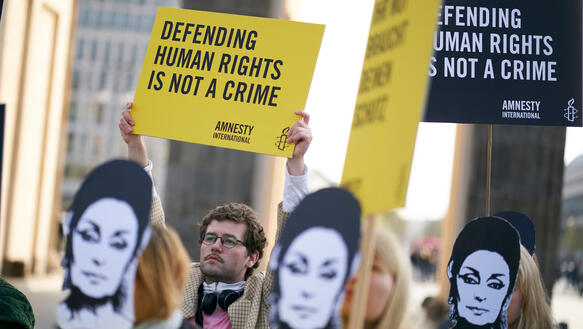
 This month’s action was for Pakistani human rights defender and researcher Muhammad Idris Khattak (pictured) who was ‘disappeared’ in November 2019. Nothing has been heard of him since, and his family is extremely concerned for his well-being – he is a diabetic needing daily medication, and at risk of course from Covid-19. The disappeared are at risk of torture and even death. If they are released, the physical and psychological scars endure. Disappearances are a tool of terror that strikes not just individuals or families, but entire societies. Enforced disappearance is a crime under international law and, if committed as part of a widespread or systematic attack, they constitute a crime against humanity. We emailed Pakistan’s Prime Minister Imran Khan on his behalf; his government promised to criminalise enforced disappearances, but nothing has been done.
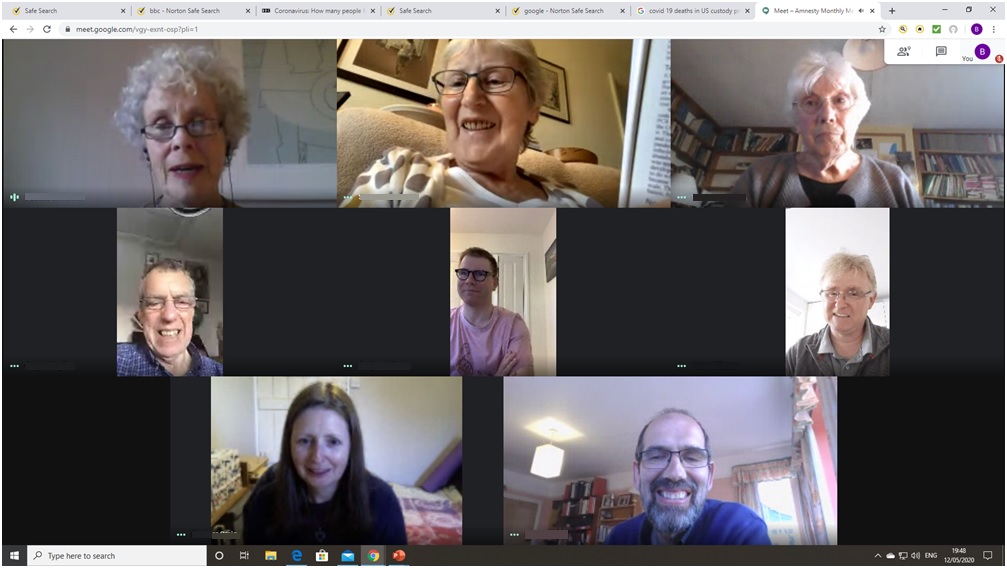 In tune with the times we held our second online virtual meeting this month, and followed up several Monthly Actions, influenced by the current crisis.
 Despite the current lockdown measures we were able to hold a virtual meeting from our own homes, and, thanks to the system set up, managed to communicate successfully.
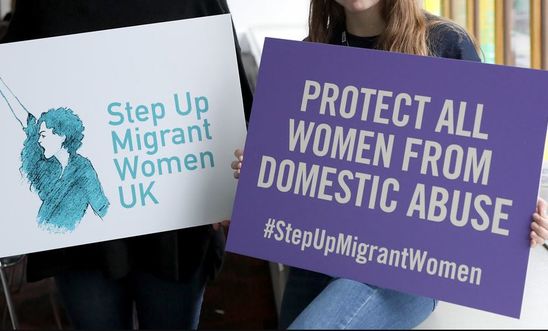 ular risk from Covid-19: women who are victims of domestic abuse, refugees and migrants, and, crucially, essential workers who need proper support and protective equipment.
 Self isolation. Funny, isn’t it, how the expression has quickly become part of our everyday language?
 Amnesty International Taunton Local Group