
Dana Kamour of Women Living Under Muslim Law gave a cogent and informative talk to our virtual meeting this month. Her particular focus was Afghanistan, but she emphasised that WLUML is a trans-national women’s organisation; it started in 1984. There are complex political and cultural laws shaping women’s lives in Afghanistan, and policies are justified by invoking Muslim law.
The Taliban are opposed to women’s education, their rights tightly controlled. 28% of the Legislature are now women, but many women in public life have been assassinated. In ongoing negotiations women’s rights are at the mercy of agreement between the Taliban and other parties – there are just four women among the 51 peace negotiators.
WLUML uses social media, webinars, lobbying and petitions which aim to educate public opinion – but ultimately change has to come from within Afghanistan itself. For more information check their website, www.wluml.org.
We heard reports on Amnesty campaigns – there is much concern about the proposed Immigration Bill, currently under consultation. There’s a wide-reaching Festival of Social Justice in the Midlands, promoted by Amnesty, and a Football Welcomes [Refugees] Campaign underway.
Reports too from our own members: letters have been written on behalf of Prisoners of Conscience in Morocco, and we are combining with the Tiverton Group to write postcards of support each month to jailed human rights lawyer Azza Soliman. Amnesty Feminists are encouraging us to sign petitions on behalf of Iranian lawyer Nazreem Sotoudeh and women in Belarus who are suffering abuse and reprisals for legal anti-Government protests.
Our Book of the Month has turned into two films and a book:
The Assault on Truth by journalist Peter Oborne, featuring Johnson and Trump
The Mauritanian, about Guantanamo detainee Mohamedou Ould Slahi
and Clemency, about US Death Row warder Bernadine Williams
Our next online meeting will be at 7.30pm on Tuesday 11 May. Newcomers are most welcome. Email amnestytaunton@gmail.com for details.




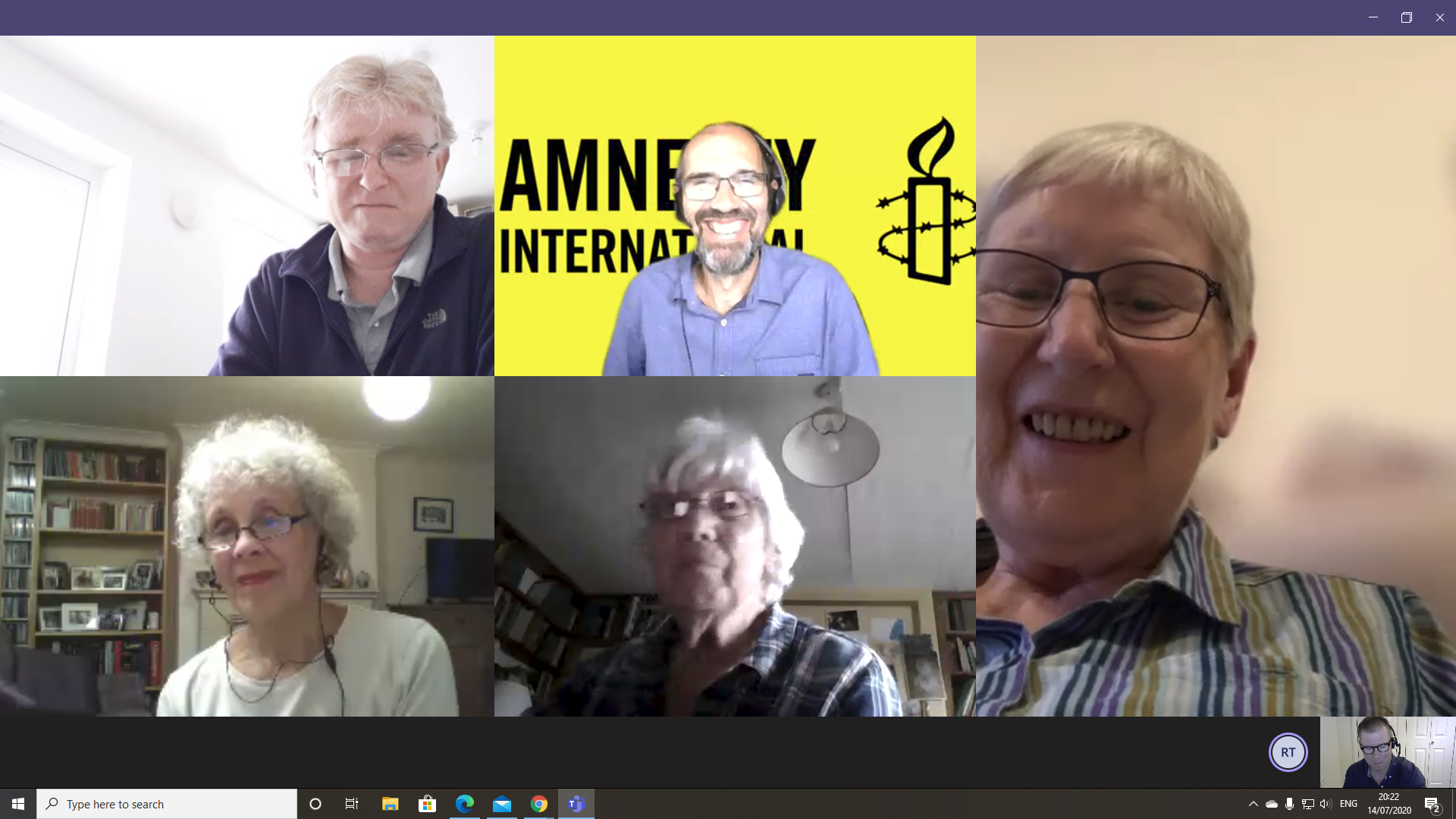 Our July meeting was held virtually – the new normal! We were joined by Helen Clarke of AIUK, Country Coordinator for Turkey, to describe her work, which is to keep abreast of all that is going on in Turkey from a Human Rights point of view and translate this into information and action.
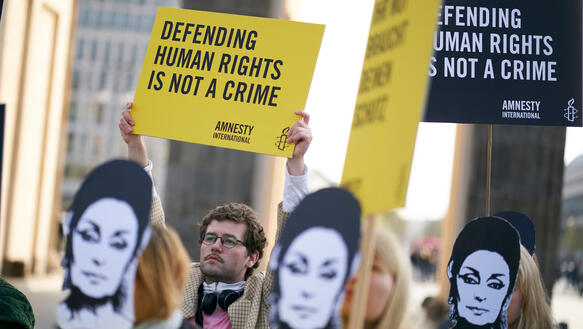
 This month’s action was for Pakistani human rights defender and researcher Muhammad Idris Khattak (pictured) who was ‘disappeared’ in November 2019. Nothing has been heard of him since, and his family is extremely concerned for his well-being – he is a diabetic needing daily medication, and at risk of course from Covid-19. The disappeared are at risk of torture and even death. If they are released, the physical and psychological scars endure. Disappearances are a tool of terror that strikes not just individuals or families, but entire societies. Enforced disappearance is a crime under international law and, if committed as part of a widespread or systematic attack, they constitute a crime against humanity. We emailed Pakistan’s Prime Minister Imran Khan on his behalf; his government promised to criminalise enforced disappearances, but nothing has been done.
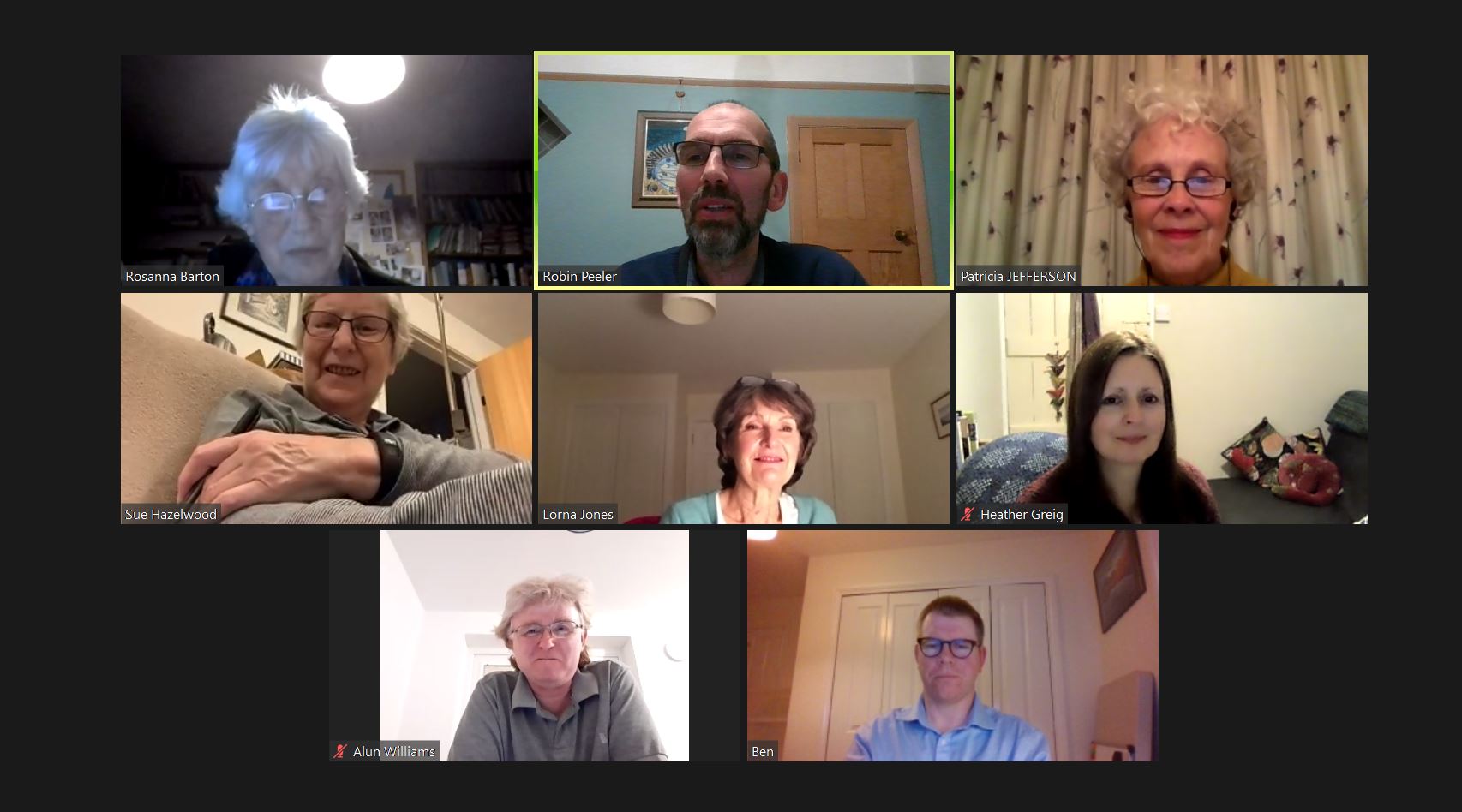
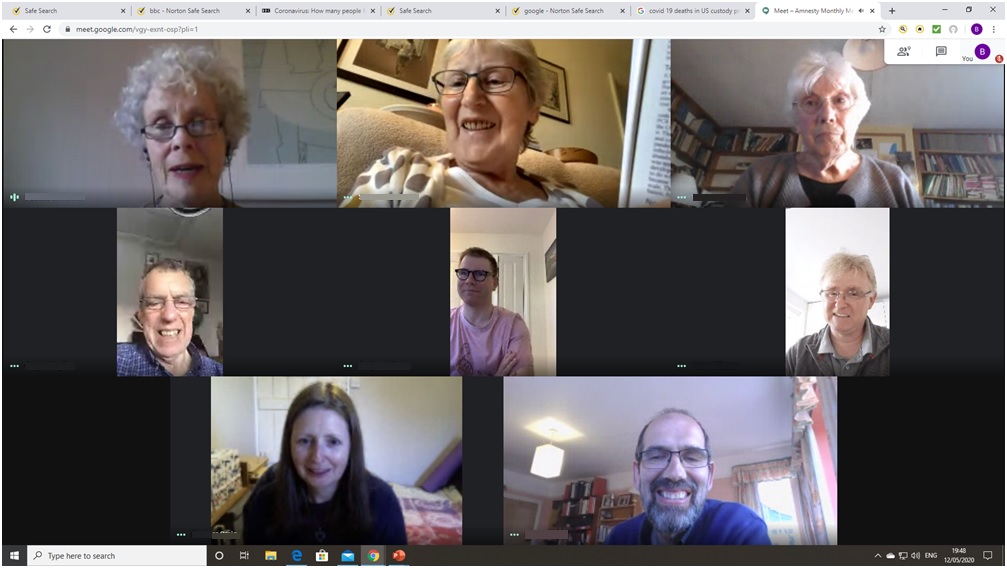 In tune with the times we held our second online virtual meeting this month, and followed up several Monthly Actions, influenced by the current crisis.
 Amnesty International Taunton Local Group